
Flight Departures from Miami Airport (MIA)
Check the real-time status of your departing flight from Miami International Airport.
Live Flight Status
Information provided by third parties and subject to change without prior notice. Fly-mia.com is not responsible for any errors, modifications, or omissions of data that may occur.
Quick Questions about Departures
- How far in advance should I arrive? The official recommendation is 2-3 hours, but most experienced travelers suggest arriving 3-4 hours before. Traffic, long check-in lines, and security controls are unpredictable.
- Is the security check (TSA) fast? It depends on the checkpoint — PreCheck and CLEAR availability rotates by time. View complete TSA PreCheck guide at MIA
- Can I rely on the Skytrain and moving walkways? The North Terminal Skytrain has been running stably since August 2025, after a prolonged closure for repairs. Moving walkways and escalators, however, are still undergoing a rotating renovation process, so there may be specific ones out of service.
- Are there enough power outlets to charge devices? No. This is a very common complaint. Charging ports are scarce, poorly distributed, or not working. It is advisable to bring a portable battery.
- Are there food options if my flight departs late at night? Very few. Most restaurants and stores close relatively early (around 9-10 pm), leaving passengers on nighttime flights with very limited options.
- Is it worth paying for a VIP Lounge? The experience is very variable, and several lounges have strict access windows (for example, only 3 hours before the flight). American Airlines' Flagship Lounge receives good reviews for its food and comfort, while others like the Amex Centurion are criticized for being overcrowded. View Access Options
Image
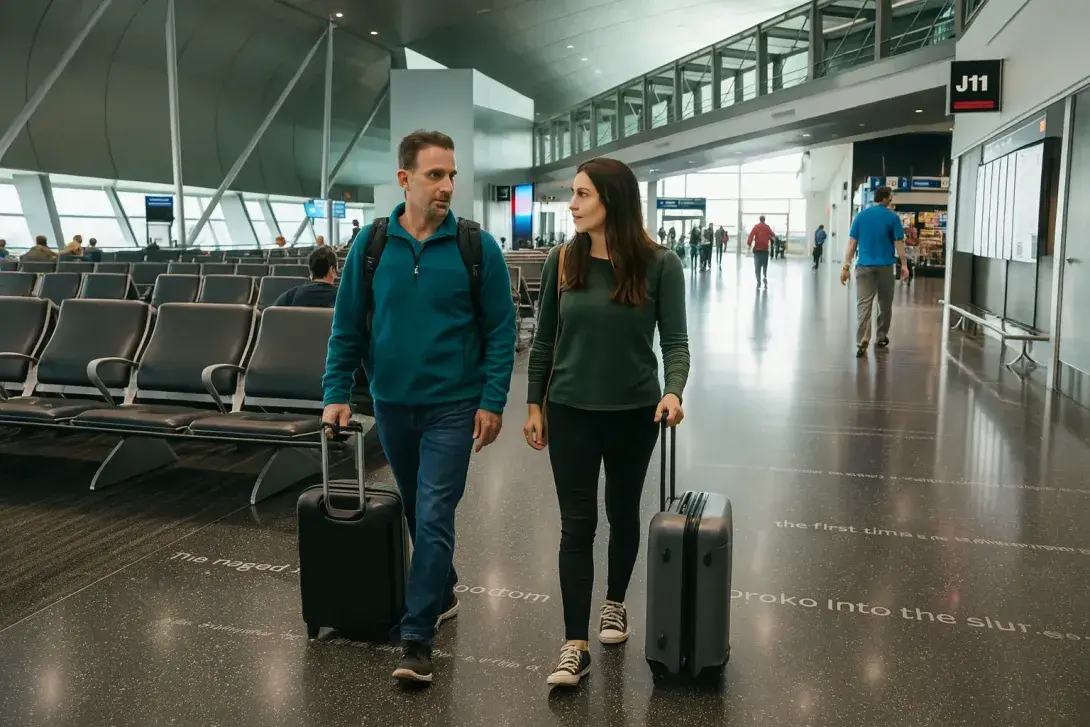
AI-generated image
Key Recommendations Before Flying
- Arrive with plenty of time (really): The official recommendation is 3 hours for international flights and 2 for domestic ones. Travelers suggest adding at least one extra hour: traffic, check-in lines, and security controls can take much more time than expected.
- Find nearby accommodation if your flight is very early: Staying at a hotel near the airport avoids the stress of morning traffic. If you choose the hotel inside the terminal itself (Concourse E), keep in mind that signage to find it is weak — ask staff for specific directions rather than relying only on signs.
- Keep your travel documents handy: Valid passport, visa (if required), vaccination certificates (if needed), booking code or boarding pass (if you checked in online), travel insurance, and a mobile phone with enough battery.
- Special needs passengers: If you are a passenger with reduced mobility or in a special situation (elderly, pregnant women, unaccompanied minors), coordinate with the airline at least 48 hours before your flight. Each airline manages its own assistance service independently, so also confirm at check-in. Reviews of wheelchair service are mixed, with specific reports of delays exceeding one hour.
- Luggage restrictions: Check your airline's restrictions, including allowed weight and prohibited items. There are reports of suitcases being damaged during transfer, so it's advisable that they be sturdy.
- Scarce power outlets: Always bring a portable battery — this is one of the most repeated complaints throughout the airport, especially in satellite areas away from the main gates.
- FAQs: If you have more questions, check the Frequently Asked Questions for quick answers.
Pros and Cons of Departing from MIA
- Pros:
- Good daytime dining options: wide variety of restaurants and shops in Concourse D.
- PreCheck speeds things up when available: at the right checkpoint, the time savings are real.
- Cons:
- Unpredictable lines: check-in and security with reported waits of up to 90 minutes.
- Scarce power outlets: many broken or non-existent in waiting areas.
- Limited food at night: most places close between 9 and 10 pm.
What to Expect from the Departure Process?
The departure process at Miami International Airport (MIA) can be an experience of contrasts. Although the airport has modern infrastructure in many sectors, the high volume of passengers and some specific maintenance issues often create bottlenecks. Below, we explain what to really expect at each stage so you can navigate the process with as little stress as possible.
Arrival at the airport and check-in
User experience:
Traffic to reach the terminals is often chaotic. Once inside, check-in lines can be very long, with waits of up to 90 minutes during peak hours, even with counters that appear unattended. Airline staff are often described as unfriendly or stressed. A point to consider: in some cases, the check-in counter and the corresponding TSA PreCheck checkpoint are in opposite areas of the terminal, forcing a considerable round trip if you don't know this in advance.
Strategy: arrive with much more time than officially recommended, especially if you are traveling during high season or with a low-cost airline, and check in advance which area of the terminal your security checkpoint is in.
Security Controls (TSA)
TSA PreCheck and CLEAR availability at MIA rotates by checkpoint and time, so the line can vary greatly even at the same time of day depending on which one you go to. If you travel frequently or want to understand how to make the most of the program at this airport (including staff treatment and the new Touchless ID system), check out the complete TSA PreCheck guide at MIA.
Boarding Gates and Organization
User experience:
Poor signage and long distances are constant complaints, especially in Concourse D, which measures a mile from end to end. The Skytrain that runs through that terminal has been operating stably since August 2025, but some moving walkways and specific escalators are still undergoing renovation and may be out of service at any time. Last-minute gate changes are common and not always clearly announced, adding to the chaos. Boarding areas are also described as crowded, with few seats available during peak traffic times.
Strategy: check your boarding gate several times before settling in to wait, and if your connection involves a long walk, allow 15-20 extra minutes in case the Skytrain or any specific walkway is not available.
Waiting Areas and Amenities
User experience:
Finding a seat can be difficult during peak traffic hours, and finding a working power outlet is even more complicated — many areas lack sufficient charging ports or the ones that exist are broken. Facilities, in general, are perceived as somewhat outdated in certain sectors, with specific complaints about the condition of restrooms. Although there is a good variety of restaurants (especially in Concourse D), many close early, leaving nighttime flight passengers with very limited options.
Strategy: always bring a portable battery, and if your flight departs at night, buy something to eat before 9 pm — after that, it's difficult to find open options.
